Some considerations if one of your platforms is suddenly shut down:
How/can you contact your current customers?
How can you capture orders due and perhaps make other payment arrangements (after they cancel pending payment to the platform)? Some jane sellers are using their ShipStation integration to do this.
Where can you quickly redirect shoppers and customers? Another platform? Your own website? Heck, a phone number? Something professional, with a viewable catalog/menu. (NOT cashapp or venmo.)
How long can you float your business without platform disbursements?
How will you pay employees?
How will you pursue any available funds owed from a company in bankruptcy/disarray?
How quickly can you pivot to another platform, in the midst of a crisis?
What resources will you need to lean on?
How will you manage the impact to your brand that might come with cancelled/delayed orders and/or a platform’s lack of refunds to Buyers?..without badmouthing or begging.
Will your business be protected from Buyer claims?
See Enron, FTX, bernie madoff’s fund, the list goes on… Companies don’t let on that there’s serious financial problems until things have already halfway imploded.
I think at some point one of these Amazon partner companies (the #1 seller on Amazon right now, Pattern, is one of these types of companies) will end up going bust and leaving the brands holding the bag.
Keep in mind just because a company seems well run and profitable doesn’t mean it is. You don’t know how leveraged the company is, and even if they’re not they can become leveraged. There’s tons of instances of a private equity firm doing a leveraged buy out of a company (that’s when they use a lot of debt to fund buying a company, and that debt goes on that company’s balance sheet) and the economy takes a dip (or they mismanage it) and they go bust.
And when it does happen it’s almost a certainty people will be blindsided by it, because if you’re partnering with one of those firms you’re doing it because you don’t want to babysit an Amazon account, so it’s unlikely you want to spending that time keeping tabs on that company’s financials constantly.
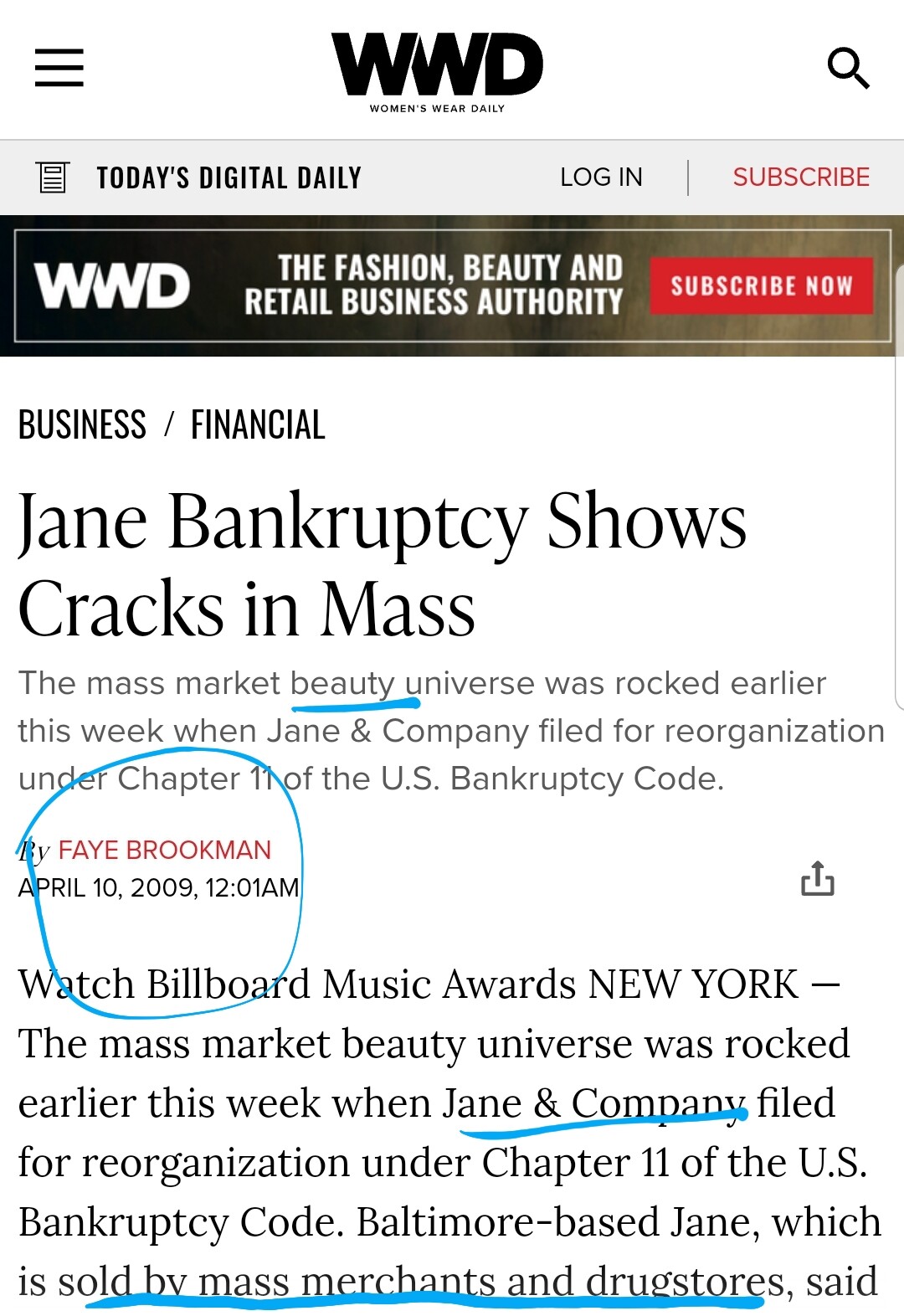
Especially when a mere 6 months ago you have articles on the new CEO, like this:
Since its founding [in 2011], Jane has received over 30 awards and features more than 2,000 sellers on its site. Recently, Jane was ranked on the Utah Business Fastest-Growing Companies and Financial Times America’s Fastest-Growing Companies 2022 lists.
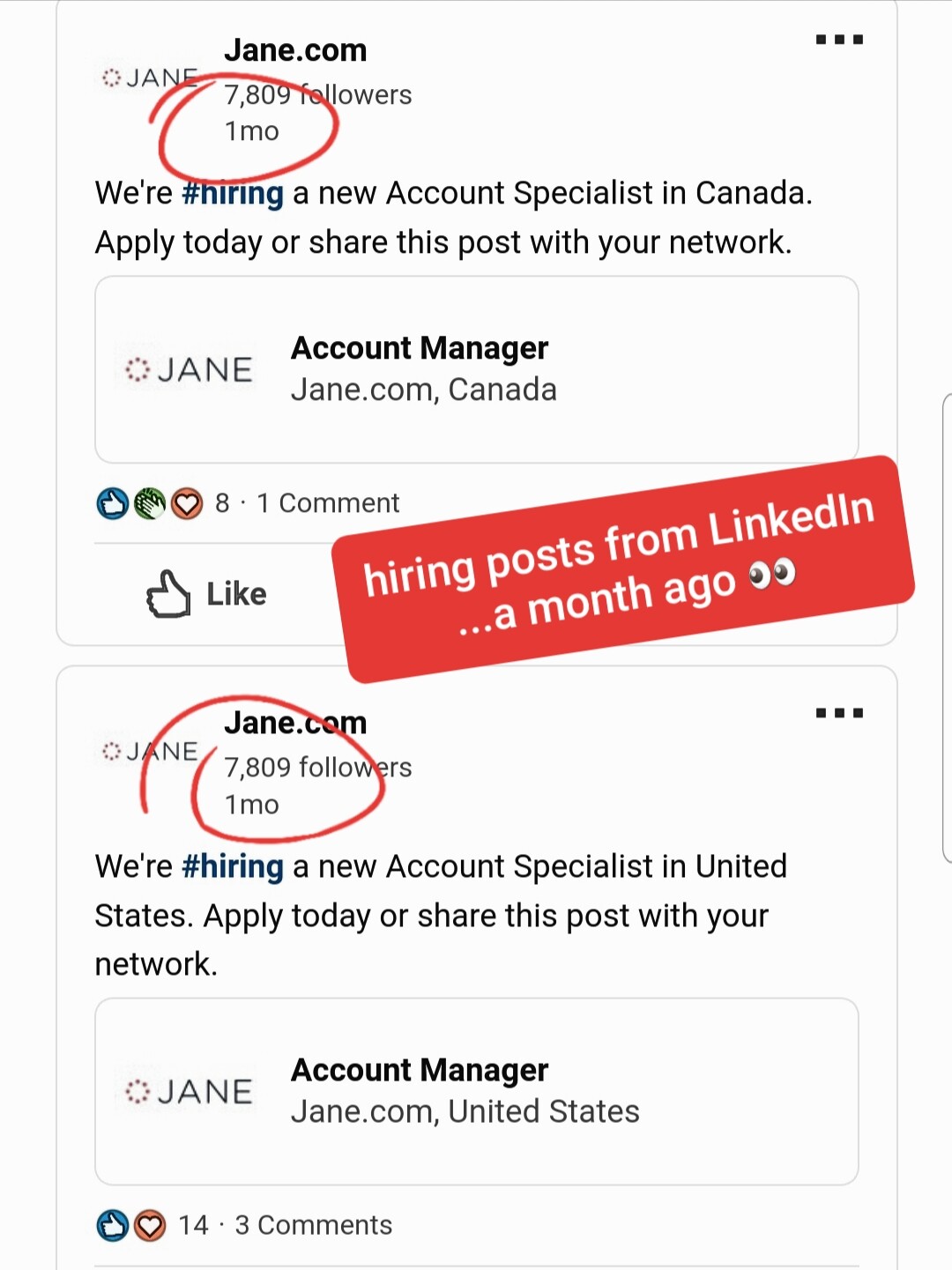
jane.com had every hallmark of a successful and growing business until the last few weeks. It’s quite a head scratcher, for sure–but most importantly…
Well, in this case they’re talking about fraud, so the successful image could’ve been a complete sham, much like how FTX and bernie madoff outwardly projected stability and success while it was just a massive fraud behind the scenes.
It’ll probably be a while before we know for sure as this will take some time to investigate.
There was a time, not many years ago, when I and many other business people would assume a woman run business had a higher probability of failing than a male owned business.
There are certainly many highly skilled woman business owners today.
But a marketplace targeted solely for women owned businesses, would seem to be higher risk today due to its reliance on a smaller share of the buyers who give a darn about who owns the business, and their demographics.. Deciding to limit the appeal of a marketplace site in an ecommerce market dominated by big players might be a recipe for failure, and appears it was for Jane.com.
This is not withstanding the fluff and hype PR coverage might have published.
Many companies grow quickly up to the day they stop growing. Owned one of those myself. I pulled the plug on it, well before many of my competitors who had the same experience. I got to avoid bankruptcy, and keep the profits I made in the growth years.
I am sad when any small business fails. I am angry when they screw other small businesses in the process.
Whatever the nature of failure was, it is likely they could have pulled the plug earlier and not ripped off the resellers on their site. I strongly doubt that the symptoms only surfaced in the last few weeks. They were, in all likelihood, using their seller’s money to make payroll for longer.
It appear to be a key characteristic of Internet companies that they expand their headcount beyond what is efficient and affordable.
We can look at Amazon, Meta, Wayfair. Twitter and many other companies who have cut headcount or are still cutting headcount.
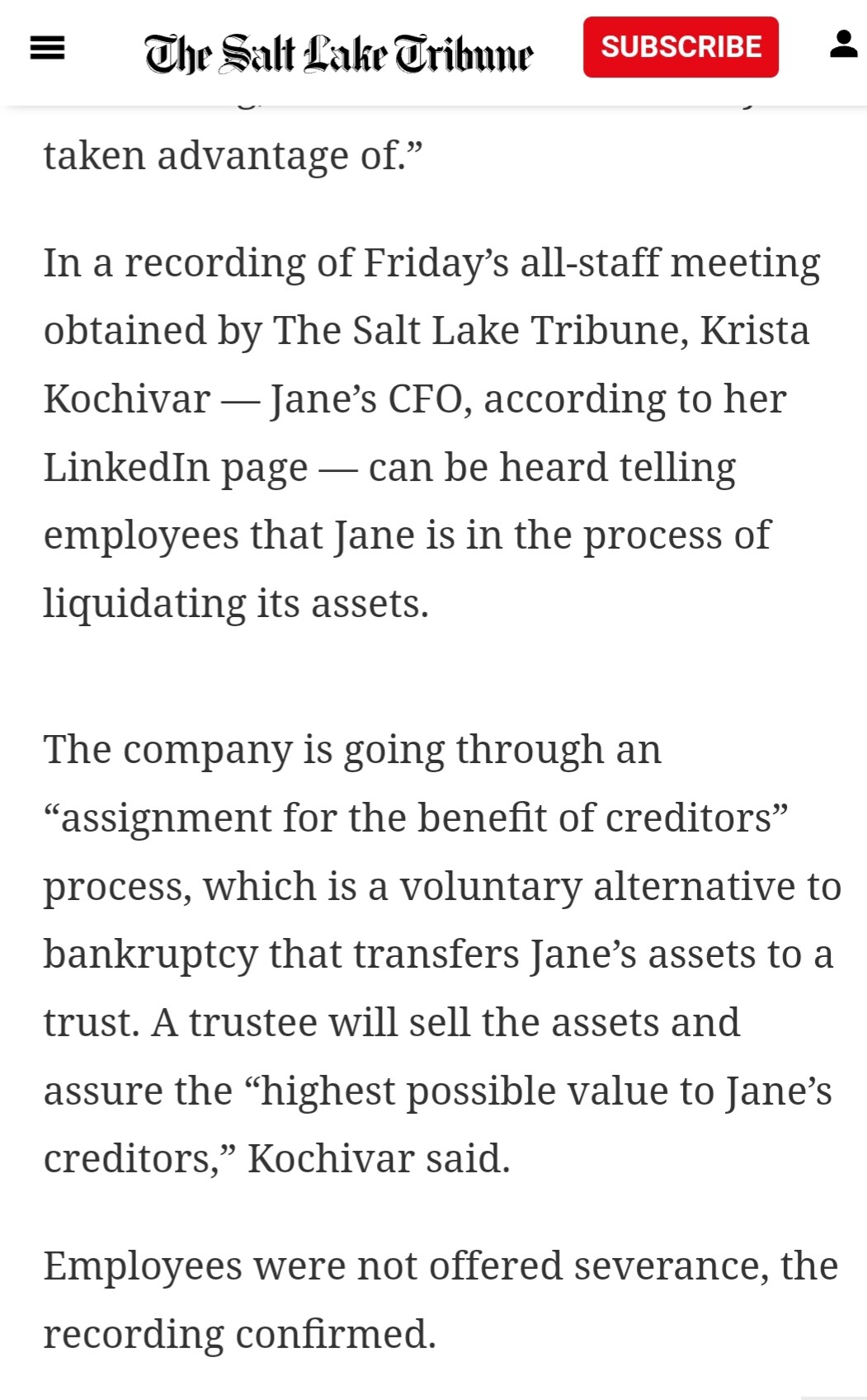
Still no official/public statement from jane.com on closing, bankruptcy, and/or seller or customer remedies or settled disbursements. Just this leaked audio.
Assuming that the company’s not an outright fraud and they stole all the money, they should still have receivables from the credit card processors for recent sales.
Should be an interesting case if there isn’t already precedent for this. Lawyers representing marketplace sellers will try to claim that those funds belong to the sellers, while lawyers for other creditors will argue that those funds belong to Jane.com and the sellers are unsecured creditors like everyone else.
7. The Jane office is not only beautifully decorated, it also has tons of fun rooms for employees to enjoy. One of our most unique rooms is the Jane barbershop, which is complete with talented stylists and barbers. Employees can get scalp massages, trims, blowouts and braiding services onsite.
Well when you’re basically a shell company that relies on it’s image to keep the gravy flowing, you don’t want employees walking around with bad haircuts.
Most Series A raises are for small startups who are just finding their footing, whereas Jane was founded in 2011 and is expected to generate $250 million in sales this year.
Noormohamed was brought on as Jane’s new CEO just over a year ago, and part of his job was to make sure that Jane became a household name. With that in mind, the company began to gear up for growth, and raised the $40 million to fuel it. The Series A is Jane’s first outside financing since it was founded.
40 million was 16% of their total sales.
Sounds like they tried to grow too fast and burned through the cash on CEO salary, marketing, and fluff.
The VCs came for their initial infusion and the expected juice.
Just adding to the pile of failed businesses that will be growing in the near future as VC money dries up and margins are called.