The race our nation can’t afford to lose, plus a new commitment from us and a fresh set of community investments
- Company news
- Amazon Data Centers
- Sustainability
- Community
- Job creation and investment
Share


Written by Matt Garman, CEO of Amazon Web Services
Published:October 02, 2026
12 min read
One of the big lessons that the United States took from World War II was the need for national transportation infrastructure back at home. A system of interconnected highways, bridges, and roads was critical for national defense and would also provide much needed economic prosperity following the war. In 1956, the government began to build the National System of Interstate and Defense Highways, an infrastructure project larger than anything the country had seen since the railroads a century earlier—and paid for entirely with taxpayer money.
The buildout of America’s modern transportation system transformed the U.S. economy and way of life, creating countless new businesses and jobs, and connecting communities in ways that reshaped how Americans lived and worked. Seventy years later, we’re in the midst of the largest infrastructure buildout since the highways—our digital infrastructure. The rapid adoption of the Internet starting in the late 1990s, and then cloud computing in the mid-2000s, changed the way we interact with information and services, and substantially lowered barriers for entrepreneurs, companies, and governments to provide new customer experiences. Today, virtually everything we do each day—shopping, banking, stock trading, ride hailing, booking travel, receiving healthcare, streaming entertainment, as well as critical research in everything from preventing and curing disease to finding ways to use less energy and natural resources—is digitally driven and enabled by data centers, which manage the computing, storage, and access necessary for these activities. In the last few years, there’s been a rapid acceleration of data center construction across the country with the advent of Artificial Intelligence (AI).
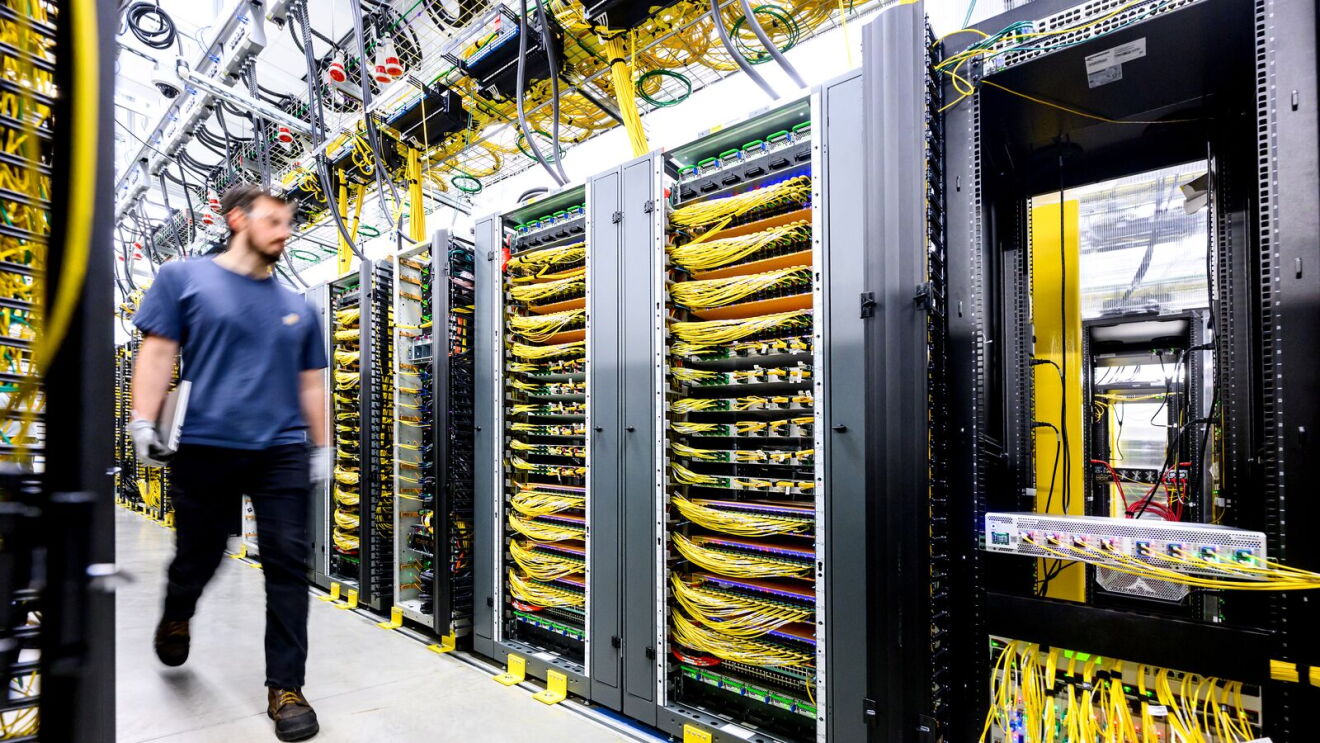
It’s still very early, yet AI is already transforming businesses, industries, and customer experiences in ways we couldn’t have imagined just a few years ago. AI will power the next generation of businesses, hospitals, schools, and other critical public services, as well as critical defense systems, intelligence analysis, cyber defense, and satellite operations—and new kinds of skilled jobs will be created to help make it all possible. Just like the national highway system, our country’s economy, national security, and everyday lives stand to benefit immensely. And, unlike the railroads and highways, this buildout is being financed without taxpayer money because private industry is picking up the tab.
There is urgency to this data center buildout because we aren’t the only country that sees the benefits of AI for the economy and national security, and the countries that lead in AI will shape it and get the most from it in the short and long run. The choices we make today will determine that outcome, and a lapse in our nation’s focus or resolve could put us behind, and potentially irreparably so.
With any change, there will be important questions raised, but there will also be misinformation and outright lies, and in the age of social media and 24/7 news, myths take hold faster than ever before. In fact, this build out is so important geopolitically that there are widespread reports of various countries intentionally seeding misinformation in the U.S. about data centers to trick us into slowing down. Right now there are over 100 data center moratoriums being considered across the country. If these measures are enacted, the U.S. could be writing its own losing ticket to this race, and the consequences would last generations. As a country, we can’t afford to find ourselves in that position.
There are clearly areas in which the technology and energy industries can be doing better (along with their government partners) but just like in the past when the country has banded together to accomplish something that’s critical for our national security and economic prosperity—we should approach this as a long-term mission that the private and public sectors pursue together.

Let’s start with some of the myths floating around, and then I’ll share a new commitment to build responsibly, and a new set of programs to benefit our data center communities.
Myths vs Facts
Myth #1: Data centers are taking all of our water.
This is false. Data centers actually use very little water relative to other industries. Direct data center water consumption is about 0.5% of total U.S. direct industrial water use—orders of magnitude less than golf courses, almond farming, and many other industries. For instance, U.S. golf courses alone use ~200x more water than all of Amazon’s data centers—more in about two days than we use in a full year. And, in a recent study of major U.S. industries that collectively account for ~50% of U.S. industrial GDP, data centers ranked lowest in water withdrawals while delivering the highest economic value per gallon.
One of the most common soundbites repeated about water is that a typical data center uses five million gallons per day. This is also false. The reality is that a typical data center uses, on average, about 170,000 gallons per day. And at Amazon, our average data center uses less than 13,000 gallons per day (the equivalent of just 42 U.S. households).
Myth #2: Data center providers are responsible for driving up all the energy rates.
This is misleading and convenient scapegoating. First, the facts: if you look across states with large numbers of data centers, costs have gone up in some (e.g., Illinois, New York), down in some (e.g., Indiana and Mississippi), and grown slower than the national average in places like Texas. In instances where energy rates are going up, it’s primarily because the grid is old and hasn’t been invested in and expanded before the demand arrived. About 70% of the power lines were built over 25 years ago, with many dating back to the 1960s and 1970s. The capacity and performance needed hasn’t scaled with the rapid growth of digital and AI demand, and the accelerated adoption of AI is precipitating a build-out that was destined to happen—it’s just happening faster than most folks imagined. And, once we collectively build out this new capacity, again funded by the private sector, it should lead to flat or lower rates in the future for residents living in communities with these expanded grids, which we’re already seeing in some states such as Mississippi, Georgia, and Indiana. For our data centers, we work directly with utilities to understand the funds that are necessary to support our projects (e.g., new transmission lines, substations, and other grid upgrades) and then ensure that the revenue we provide to the utility is sufficient to pay for these requirements.
Myth #3: Data centers emit huge amounts of pollution with their large backup diesel generators.
This is also untrue. Most of the services consumers, businesses, and governments rely on every day (e.g., 911 calls, stock markets, healthcare and banking apps, ride-hailing apps like Uber and Lyft, ChatGPT) depend on data centers functioning. As a result, data centers have backup power available in case of a power outage. Some do this through diesel generators that sit idle most of the year. However, when those generators are installed, companies need to get permits for the full potential emissions—what those generators would produce if they ran for the maximum hours under the permit. Critics then see those permits and say things like “…the generators could emit up to 249.9 tons per year each of nitrogen oxides, carbon monoxide and volatile organic compounds.” The truth is data center generators almost never run. They’re idle 99.9% of the time (they run roughly 10 hours per year, mostly for required maintenance testing). And even when backup generators do run, much of the industry now uses Tier 4 emission controls (the cleanest EPA emission standard), so annual NOx emissions from an average data center are the same as a single round trip flight from Seattle to London.
Myth #4: Community members get nothing from data centers.
This is also false. Data centers bring considerable tax revenue, positive economic impact, large numbers of good jobs, education programs and other benefits to the communities where they’re built. Data center operators are often the single largest taxpayer in a community, with upfront payments routinely exceeding entire annual municipal budgets in the first year of construction, and long-term tax revenue often exceeding prior land use revenue by more than 1,000%. For example, in St. Joseph County, Indiana, the taxes Amazon will pay to the county are estimated to exceed $3 billion, while the prior use on the same land would have paid just $1.2 million over the same term. In Montgomery County, Missouri, our project will pay more than $1.8 billion in taxes over 25 years, while the prior use would have generated about $200,000 (0.01% of what we’ll pay in taxes) over the same period. A 2026 report by Mangum Economics for the Northern Virginia Technology Council estimates that without data center revenue, the average homeowner in Loudoun County, Virginia would pay additional property taxes of $5,800 per year. This new revenue from data centers often not only dramatically reduces the taxes paid by families, but it also funds investments in schools, fire and police departments, parks, roads, and other community services. This is on top of the direct investments most data center companies make to local organizations that are used to address issues most important to them, such as modernized emergency dispatch services, clean energy projects, and support for local food banks. Over the past three years, Amazon has contributed more than $1 billion to communities across the U.S. in which we have a meaningful data center presence.
Additionally, thousands of construction jobs are created to build data centers. These jobs benefit families in these communities and are a boon for local small businesses. The average wages paid far exceed local and national medians, and the job numbers associated with these projects are typically very significant compared to the size of these communities. For example, in Madison County, Mississippi (population: 116,000), where we have two data center sites under construction, there are over 2,300 people currently employed in construction; and in Newton County, Georgia (population: 125,000), there are over 1,500 people currently employed. Many jobs are also created to operate a data center once it’s complete. For example, for the data centers in Madison County, we will employ over 1,700 people, and in Newton County, we will employ 400 people. And, we have over 20 education and workforce development programs to help ensure these jobs are available to people from the community, and over 10,000 learners and educators are participating in our programs across 15 data center regions. You can read more about those and our other education programs here.

Our Data Center Commitment
We understand why there is apprehension in some communities where data centers are being built. While there is much we (and other data center operators) are already doing, we’ve decided to codify our practices into a series of tenets that we’re calling our “Amazon Data Center Commitment”.
1. Protecting & Enhancing Communities
- To ensure that our data centers do not raise electricity bills for people in our communities, we work with local utilities, regulators, policymakers, and grid operators to ensure that the energy prices we pay for our data centers are sufficient to cover both the energy and infrastructure improvements that may be required.
- We work with local officials to ensure our contributions to the local tax base are passed along to residents in the form of lower taxes and to improve schools, hospitals, fire and police departments, parks, roads, and other community services.
- We tailor our contributions to nonprofits and community organizations to address the needs that communities identify as most important to them, such as access to community college degrees, skills and job training, and energy and water preservation and affordability.
2. Providing Jobs & Economic Benefit
- We create thousands of skilled jobs between construction and long-term data center operations, supporting local families and helping local small businesses thrive.
- We pay nationally competitive wages that often exceed the local and national median, and provide healthcare benefits from day one on the job.
- We prioritize local hiring and procurement wherever possible, providing economic opportunity and impact to residents, local contractors and service providers.
3. Engaging Communities
- We no longer use nondisclosure agreements with the government agencies we work with on our projects.
- We host open houses in communities where we operate to share information about what we’re doing and encourage open dialogue. We share information about our plans as early as possible, listen to concerns, and ensure communities have the facts and the ability to engage with us as projects progress.
- We proactively share innovations in data center design, new material deployment, and cooling technology through our Sustainability Exchange to enable industry participants to benefit.
4. Building & Operating Responsibly
- We invest significantly in carbon-free energy to help our business and society transition toward a more sustainable future for our planet. Since 2019, we’re the largest corporate purchaser of carbon-free energy and have built by far the largest carbon-free energy portfolio of any company in the world.
- We have the most energy-efficient data centers, currently leading the industry with a 2025 global PUE (Power Usage Effectiveness) of 1.14. While this rating is better than both the industry average (1.25) and on-premises enterprise data centers (1.63), we plan to make continued progress in future years.
- We are committed to being water positive across our data centers by 2030, returning more water to communities than we use. As of 2025, Amazon was 75% of the way toward this goal, and our data centers were seven times more water-efficient than the industry average.
- We design our data center operations to at least meet local jurisdictional sound requirements at the perimeter of our site.
- We invest in energy grid and water system infrastructure upgrades that support local communities. We use non-potable, reclaimed, or brackish water in our facility design wherever possible.
- We will utilize backup generators in new sites that meet the EPA’s Tier 4 emissions standards (the cleanest EPA emission standard) or the equivalent standards in other regions.
- We will publish our energy use, energy efficiency, water use, water efficiency, and the percent of energy from carbon free resources for the public to review on an annual basis.

New Community Program, “Built Together”
We’re also announcing today “Built Together”—our new community investment framework for data center communities, starting in the U.S. With Built Together, Amazon will add more than $1 billion over the next five years to what we’re already doing—with communities in the driver’s seat to determine what’s most useful for them across education, job training, energy affordability, water and energy preservation, and local priorities. The program is organized around three pillars that communities told us matter most:
Education and Workforce Pathways: Amazon is investing in free community college and hands-on workforce training for residents of our data center communities. Residents can pursue a certificate or associate’s degree in a high-demand field to increase job readiness for in-demand careers, including: electricians, HVAC experts, fiber opticians, IT, healthcare, education, public safety, and advanced manufacturing—all at zero out-of-pocket cost to students with Amazon covering financial gaps (out-of-pocket costs after aid). We have started to establish agreements with local community colleges and plan to launch the program in the next few months. Over the next five years, we estimate that we will connect over 300,000 students to free degree access in data center communities.
We are also expanding our network of Modular Training Centers (MTC)—physical training facilities located on or near data center sites that provide free certification programs in skilled trades with direct pathways to employment at Amazon and our construction partners. Each center includes classroom spaces with specialized equipment (e.g., electrical trainers, fiber splicers), simulated data center environments (mechanical galleries, data halls), and outside-plant training yards with fiber vaults, utility poles, and heavy machinery. Each MTC trains approximately 2,000–4,000 learners per year across certification programs ranging from 4 to 16 weeks in skills for in-demand jobs. Today, we operate three MTCs, six more are under development, and we are planning to build an additional 16 for deployment in data center communities under this new investment. By the end of 2028, through these centers we plan to prepare up to 100,000 workers annually for real jobs in their hometowns—fully funded by Amazon.
Community Energy Affordability and Water Solutions: In partnership with leading nonprofits, local utilities, and state energy offices, we will make available grants for energy efficiency upgrades to K–12 schools, community buildings (fire/police, nonprofits, other publicly owned buildings), and single/multifamily homeowners in counties where we have data centers. This funding will help cover costs to install heat pumps and HVAC systems, insulation, water heaters, batteries, solar installations, and other improvements that aim to reduce monthly energy bills by 20–40% year after year. Over the next five years, this program targets upgrades for more than 300 schools and community buildings and over 30,000 homes (saving approximately $700 per household annually). And there’s an opportunity for further savings because when buildings invest in energy and water efficiency updates they often qualify for additional incentives and rebates at the local, state, and federal levels. We plan to roll this new program out across our data center communities in the coming months.
We’ve also contracted for over 65 water projects in communities near our operations around the world that are expected to return more than 8 billion gallons of water annually for use by local communities—more than double what Amazon used in our data centers in 2025. We return local water supply through replenishment projects in partnership with dozens of local and national NGOs and water technology partners.
**Community Investment—Flexible Funding for Local Priorities with Communities in the Lead: **Every community is different. What matters most in rural Oregon is not the same as what matters in suburban Virginia or a mid-size city in Ohio. Amazon is partnering with local nonprofit organizations and community foundations across the country to provide millions of dollars per year in each community, in collaboration with local organizations and residents, to ensure funds are directed toward the investments communities identify as highest priority—including roads, parks and athletic facilities, fire department equipment, affordable housing, food security, school enhancements, disaster preparedness, and community events. Working with county officials and trusted community organizations, we will identify the highest-impact investments and provide annual funding with transparent reporting on outcomes. This is not Amazon deciding what communities need—it is Amazon providing resources and letting communities decide.
This is just the start and we’re going to keep at it—doing our part to build responsibly and with the communities with whom we partner. We’re building our future, together.
Related stories
- Amazon’s water conservation and replenishment efforts around the world
- Amazon’s carbon-free energy projects contribute $11 billion to US GDP, support nearly 22,000 jobs in local communities
- Amazon raises minimum starting pay for full-time core operations employees to $20/hour, with average pay reaching nearly $24/hour
- Amazon and Wiwynn announce expansion of advanced manufacturing facility in Texas, creating nearly 1,000 jobs and boosting the US supply chain
Related Tags
- Company news
- Amazon Data Centers
- Sustainability
- Community
- Job creation and investment


